Why Xiamen Is Called the ‘Gate of China’ – Six Fascinating Reasons That Explain Why
Located on the southeastern coast of China, Xiamen has long held a rather important role in China’s extensive history. Often referred to as the “Gate of China,” this picturesque port city has served as a threshold between the country and the rest of the world. This article uncovers six compelling reasons why Xiamen has earned this title.
1. A Historic Port with Global Reach
For centuries, Xiamen has served as a critical entry point for maritime trade. During the Ming Dynasty, it was a busy harbour catering to foreign merchants and Chinese seafarers alike. Later, during the Qing Dynasty, it was designated as one of the first five treaty ports open to foreign trade following the Treaty of Nanking in 1842. British, American, and other Western traders rushed to its shores, turning Xiamen into an international gateway after. Ships brought in plenty of goods and people, in addition to exporting silk, tea, and porcelain.
2. Encouraging Chinese Emigration
For generations, Xiamen served as a departure point for Chinese emigrants seeking new lives across Southeast Asia, the Americas, and far beyond. Many of today’s overseas Chinese communities, especially in Malaysia, Singapore, and the Philippines, trace their roots back to this very city. With every departing ship from Xiamen, its people carried forward its language, cuisine, and traditions across oceans. Incidentally, the widely spoken Hokkien dialect among the Chinese diaspora, originated in Xiamen.
3. Incorporating Foreign Influence
The foreign concessions and consulates that were once an integral part of Xiamen have since left behind more than just colonial architecture. When walking through Gulangyu Island today, visitors are bound to stumble across a combination of Victorian-style villas, gothic churches, and European-style music halls.
4. An Economic Powerhouse in Modern China
Xiamen also happened to be one of China’s first four Special Economic Zones (SEZs) in the 1980s. This opened up the local economy to foreign investment, and allowed capitalist ideas to take place. It paid off as today, Xiamen attracts the presence of global companies and is a hub for logistics, manufacturing, and high-tech industries. Additionally, its ports handle millions of containers each year, and its economy is tightly linked with Taiwan, Southeast Asia, and the rest of the world. It’s proof of China’s ability to adapt and grow.
5. A Hub of Tourism and Cultural Charm
Apart from its economic and geopolitical role, Xiamen is also renowned for its incredible beauty and picturesque surroundings. Tourists enjoy its relaxed coastal vibe and rich history. Gulang Island is now a UNESCO World Heritage Site, and touring this place is one of the top things to do in Xiamen. Temples like Nanputuo coexist with modern art galleries and boutique cafés. The city even hosts the China International Fair for Investment and Trade (CIFIT) every September, which attracts global attention every year. With lush greenery in its streets, fresh seafood markets, and stunning sunset coastlines, Xiamen shows its visitors a softer and relaxed side of China. Booking a holiday to Xiamen? Located in the heart of the financial district, the Pan Pacific Xiamen is a recommended choice for business and leisure travellers.
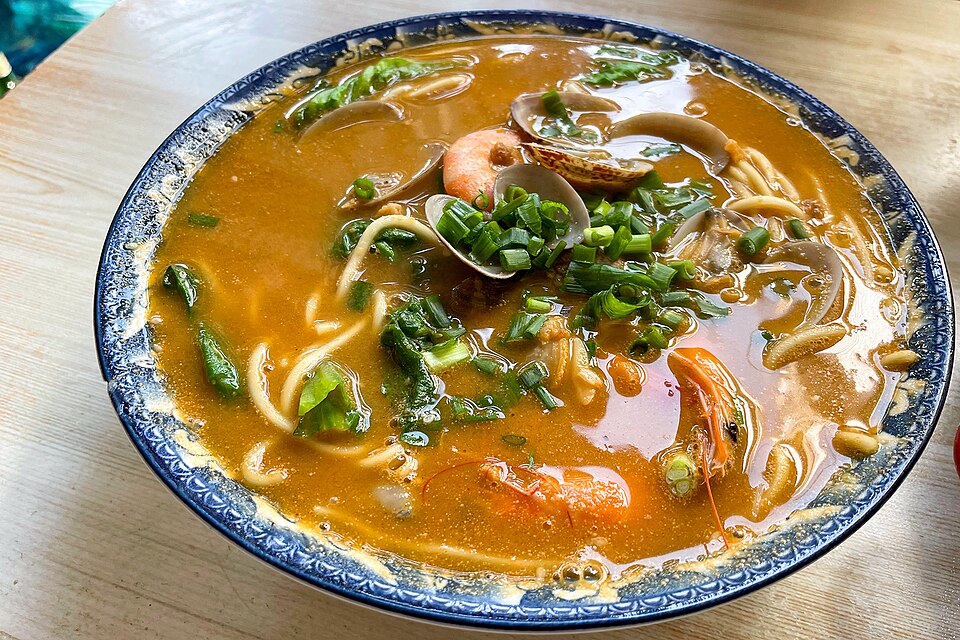
Windmemories, 20230131 Seafood Shacha Noodle, CC BY-SA 4.0
6. Cross-Strait Relations with Taiwan
Geographically, Xiamen sits just across a narrow strait from Taiwan. Politically and culturally, this proximity makes it one of the most important channels of dialogue between the mainland and the island. As the tea trade declined in the early 20th century, Xiamen shifted its focus to exporting products such as canned fruits, canned fish, paper, sugar, and timber. Between 1938 and 1945, the city was under Japanese occupation, and in the years that followed, it became a battleground between Communist and Nationalist forces during the Chinese Civil War. Visitors will find direct ferry routes, trade partnerships, and cultural exchanges flowing through this area. Interestingly, many Taiwanese have long settled in Xiamen, finding comfort in shared dialects, cuisine, and traditions.
