Why Is The Sigiriya Rock In Sri Lanka Called The Lion Rock?
The Sigiriya Rock is one of the three main cultural sites in Sri Lanka, located close to Polonnaruwa and Dambulla. It is also a UNESCO Heritage site and is incredibly tall, with the ruins of a royal stronghold, making it much more interesting to anyone who visits. People who come here often stop to enjoy the view and think about the story of the monarch who built the castle a long time ago to portray his power, and wanted to showcase his creativity by building an entrance resembling a large lion. Therefore, people often call the Sigiriya rock "The Lion Rock". You can understand more about Sigiriya Rock’s history, architecture, and symbolism if you know the story behind why it is called the Lion Rock.
The Origin Of The Name
King Kashapaya wanted his fortress to look strong, and he wanted to go to the palace by climbing through the lion's mouth. So, the name "Lion Rock" stems from the big gate that used to protect the stronghold that looked like a lion. However, today, you can only find the enormous feet of the lion at the bottom. As this giant structure resembles a lion, natives started calling this rock the Lion Rock.
When to Go
The dry season, which lasts from December to April, is the finest time to go to Sigiriya, one of the famous tourist places in Sri Lanka. The weather is pleasant and there isn't much rain during this time, which makes the climb safer and more fun. The Sigiriya Rock is open from 6.30 AM to 5.30 PM. Therefore, best to visit early morning or late afternoon. The hike will take about 30-45 minutes, so come prepared to hydrate. You will see beautiful frescoes, water gardens and remnants of a palace built by King Kashyapa during the hike. The steep climb is worth the view from the top.
Staying Close to Sigiriya
There are a lot of options for tourists to stay around Sigiriya Rock. There are Resorts like Heritance Kandalama, which have modern amenities mixed with authenticity. Most such places have beautiful rooms and pools facing the Sigiriya Rock while being surrounded by greenery. A bonus of staying close to Sigiriya Rock is that you can climb Sigiriya Rock before the crowds. You can also plan tours to nearby attractions like the Dambulla Cave Temple, Pidurangala Rock, or other towns without having to spend more time getting there.
Climbing The Lion's Paws
When climbing Sigiriya, you will encounter 3 royal Gardens. As you enter, you will see the water garden, which is full of water channels and fountains. After that, you will see the Boulder Garden, which is close to the lion rock. There are large rocks along the pathway with ancient carvings. Connecting the Staircase of the Lion Rock to Boulder Garden is Terrace Garden. It is a limestone pathway leading the way. At the halfway point, you will see the world-famous frescoes of Sigiriya. A gallery full of beautiful maidens floating in clouds. Next up is the mirror wall, which is now a wall covered with scribblings and poetry. Then the Lion Paw staircase. This gave Sigiriya the name Lion Rock Fortress. The Narrow staircase will take you to the top of Sigiriya.
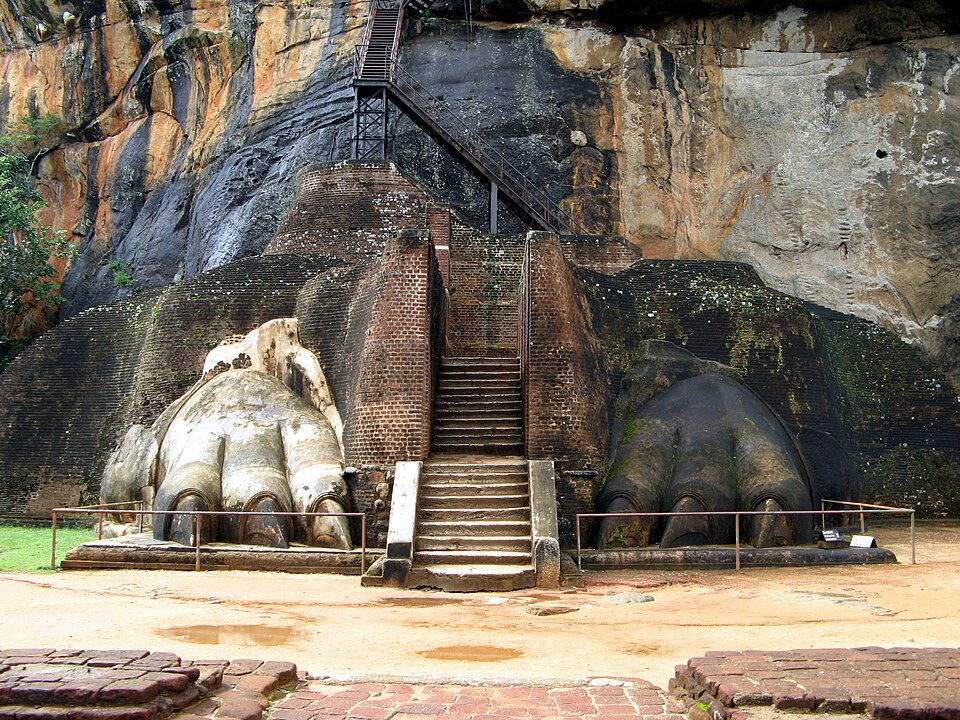
Michael Gunther, Sigiriya 0168, CC BY-SA 4.0
Why The Name Still Matters
The Culavamsa and other old texts state that Sigiriya was a royal home with exquisite gardens, water systems, and walls all around it. The entrance with the lion was just one aspect of a wider concept. Archaeological studies demonstrate that the site was constructed with meticulous attention, exhibiting both symmetry and engineering proficiency. "Lion Rock" is not merely the name of a building. People look at the view in a different way. The lion graphic helps you recall the fortress and demonstrates how it is different from other historical places. You can still picture what the entrance was like, even if the full lion is gone.
