What Does a Marine Engineer Do and Why Is It a Rewarding Profession
Marine engineers are the technical backbone of the global maritime industry. While captains and deck officers navigate vessels, marine engineers ensure that everything that can move works safely, efficiently, and continuously. From massive cargo ships to passenger vessels, offshore platforms, and naval fleets, marine engineers are responsible for the systems that power, control, and sustain operations at sea. Their role combines mechanical expertise, problem-solving under pressure, and an understanding of complex systems operating in some of the world’s most demanding environments.
The Core Responsibilities of a Marine Engineer
At its heart, marine engineering in Sri Lanka or globally is about keeping vessels operational. Marine engineers oversee engines, propulsion systems, generators, fuel systems, electrical networks, and onboard machinery. They conduct regular maintenance, monitor performance, troubleshoot faults, and carry out repairs, often while the vessel is underway. This requires a deep understanding of mechanical and electrical systems as well as the ability to respond quickly when things go wrong. Unlike land-based engineering roles, marine engineers must work within confined spaces, unpredictable conditions, and strict safety protocols, making their expertise critical to both vessel performance and crew safety.
Why Marine Engineering Appeals to the Right Mindset
Marine engineering is not a desk-bound career, nor is it suited to those seeking predictability. It appeals to individuals who enjoy responsibility, technical complexity, and environments where decisions matter. The profession offers continuous learning, tangible outcomes, and the satisfaction of mastering systems that operate under extreme conditions. For those drawn to engineering with real-world impact, global exposure, and long-term career depth, the best starting point would be to receive training at a reputed institution like CINEC Campus Sri Lanka.
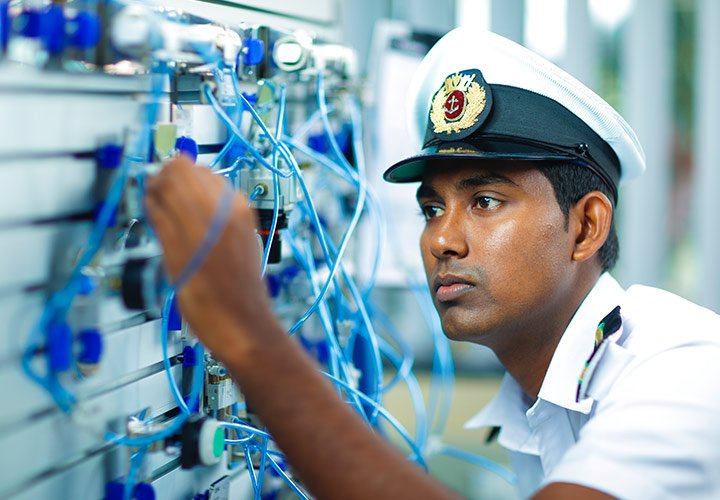
Image via CINEC Campus Sri Lanka
Why Problem-Solving Is Central to the Profession
Marine engineers rarely face textbook scenarios. Equipment failures can occur without warning, spare parts may be limited, and external conditions such as weather or sea state can complicate repairs. This makes adaptability one of the profession’s most valuable skills. Engineers must diagnose issues accurately, prioritise risks, and implement practical solutions with minimal disruption to operations. The role demands calm decision-making, technical confidence, and resilience. For those who thrive on hands-on challenges and real-time problem-solving, marine engineering offers constant intellectual engagement.
The Global Scope and Career Versatility
One of the most attractive aspects of marine engineering is its global relevance. Marine engineers are needed across commercial shipping, cruise lines, offshore energy, port operations, and maritime manufacturing. Skills developed at sea are highly transferable to shore-based roles such as fleet management, marine surveying, ship design, technical consultancy, and regulatory compliance. This versatility allows professionals to evolve their careers over time, choosing between long-term sea service, rotational contracts, or land-based leadership positions within the maritime sector.
Financial Stability and Professional Security
Marine engineering is widely regarded as a financially stable profession. Qualified engineers are in consistent demand due to the essential nature of global shipping and offshore operations. Salaries are often competitive, particularly for experienced engineers and those working on specialised vessels or international routes. In addition to pay, many roles offer structured career progression, clear certification pathways, and long-term job security. For individuals seeking a profession with both technical depth and economic reliability, marine engineering presents a compelling option.
Why the Work Feels Meaningful and Impactful
Beyond financial rewards, marine engineers often describe their work as deeply satisfying. Their expertise directly affects vessel safety, environmental protection, and operational efficiency. Preventing engine failures, reducing fuel consumption, and ensuring compliance with environmental regulations all contribute to safer and more sustainable maritime operations. Knowing that your skills play a critical role in global trade, passenger safety, and technological advancement gives the profession a strong sense of purpose that extends beyond routine employment.
Life Skills Gained Through the Profession
Marine engineering also develops qualities that extend well beyond technical knowledge. Engineers build discipline, teamwork, leadership, and stress management skills through life at sea. Working in multicultural crews fosters communication and adaptability, while long voyages cultivate independence and resilience. These life skills remain valuable regardless of whether an engineer stays at sea or transitions ashore, making the profession personally enriching as well as professionally rewarding.
