What Centuries of Maldivian Culture Can Teach Modern Travellers
One of the Asian countries that people just can’t get enough of is the Maldives, and it is with good reason. Every day life in the Maldives looks like gorgeous blue waters, powdery white sandy beaches, coconut trees swinging in the breeze and luxury wherever you look. While there are so many other reasons to visit the Maldives, many seem to be interested in its aesthetic aspects most of the time. While the beauty of the Maldives can’t be denied, it is worthwhile to take the time to see what other aspects you might be missing when visiting this paradise. The Maldives is home to a culture layered with history, resilience and artistry. Exploring these aspects of island life uncovers what truly makes this archipelago so distinctive. This guide will show you exactly what you’ve been missing when it comes to the culture and people of the Maldives.
Origins of Language and Daily Chats
While many people might assume that the main language spoken on the island is English, it is actually far from it. The national language spoken across all of the inhabited islands is Dhivehi, and it has been shaped over the centuries by the influences of Sri Lanka, India, Arabia and Southeast Asia. The language is written from right to left, unlike the plethora of languages written from left to right. Visitors often find that a few simple greetings, such as “Assalaamu alaikum” or “Shukuriyaa” for thank you, go a long way in showing respect. The evolution of the Dhivehi language is in step with the location of the country, which was along busy trading routes. Sailors brought words, rhythms and ideas that mingled with the ways of the island. For visitors, language is more than a communication tool; it is a gateway to understanding identity and belonging in island communities.
Music, Dance and Shared Celebrations
Music and dance are found in most places in the Maldives and are at the heart of Maldivian daily life. The most iconic performance is Bodu Beru, which means “big drum,” which involves energetic drumming, chanting and dancing, usually performed by groups of men while the community joins in. These traditions can be traced all the way back to the influences of East Africa that arrived through sailors and merchants back in the day. Visitors attending festivals or staying on local islands or top resorts in Maldives may witness authentic Bodu Beru performances. Even at luxury properties like Naladhu Private Island Maldives, there are cultural evenings that often feature drumming groups from nearby islands.
Everyday Flavours of Island Cuisine
Food has always been an important aspect of the Maldivian culture and is closely associated with the geography of the region. With the abundance of fish, coconuts and many kinds of fruits, you will notice that many of the dishes consist of these elements. Tuna, in particular, is a staple on the island. Breakfast usually consists of Mas Huni, a mix of tuna, grated coconut, onions and chilli eaten with roshi flatbread. Lunch or dinner might include garudhiya, a fish soup served with lime and rice, or fihunu mas, which is fish grilled over an open flame.
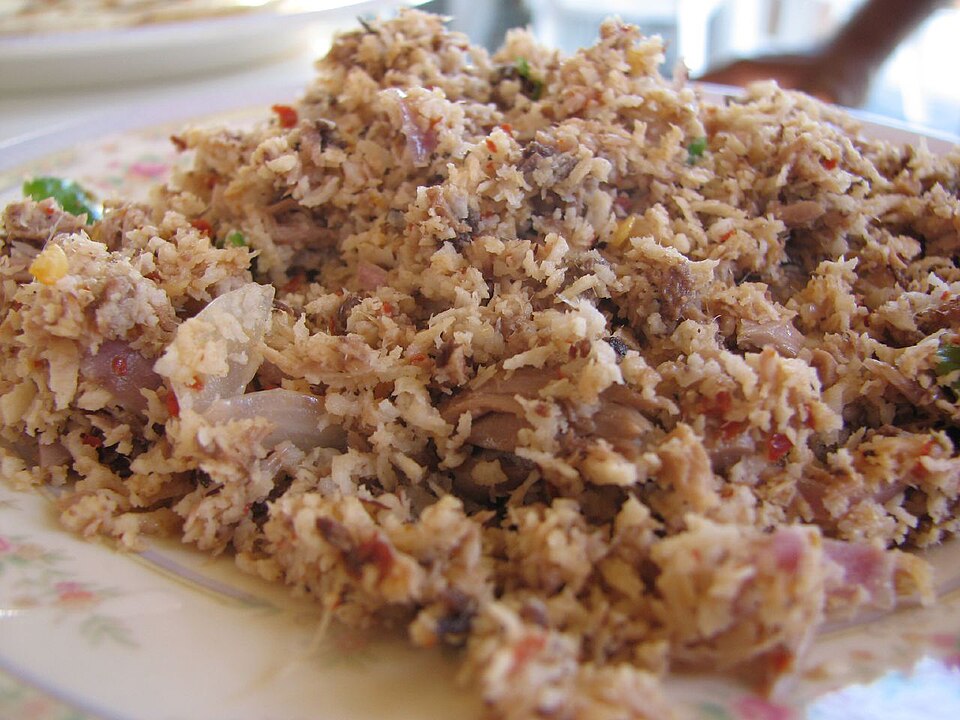
╚ DD╔ from Male, Maldives, Mashuni (382668832), CC BY-SA 2.0
Dress, Craft and Island Aesthetics
The national dress of the Maldives for men and women is both functional and beautiful. Women wear the Dhivehi libaas, which is a long dress patterned with intricate embroidery, while men may wear feyli, a black-and-white sarong paired with a tunic shirt. These garments are mostly worn during the times of festivals or ceremonial occasions. Craftsmanship is another interesting side to the Maldivian culture. Maldivian artisans are known to be quite skilled at crafts like lacquer work, coconut-palm weaving and mat-making. The island of Gadhdhoo in the south is famous for its colourful thundu kunaa mats, which were once gifted to royalty.
Community and Social Life
Local island life is all about family and community. Many Maldivian families have members from multiple generations living under one roof or in the vicinity of each other. Mosques are places of socialising and religion, while beaches and open courtyards provide space for gatherings, games and storytelling.
