Why Bangkok’s Temples Whisper Ancient Secrets That Still Captivate Souls - Where a Modern Metropolis Lowers Its Voice
In the heart of one of Asia’s most energetic cities, Bangkok’s temples create pockets of stillness that feel almost conspiratorial. Step through a temple gate, and the noise softens, movement slows, and something older begins to speak. These sacred spaces do not shout their significance; they whisper it. In Bangkok, temples are not frozen relics or staged attractions. They are living environments where centuries of belief, ritual, and human presence continue to shape the present. This quiet continuity is what draws people in, even those who arrive with no spiritual agenda.
Architecture as a Language of Belief
Bangkok’s temples communicate through form long before words are needed. Gilded stupas, tiered roofs, and carefully aligned courtyards are not decorative excess; they are symbolic systems. Every angle, height, and placement reflects ideas about balance, impermanence, and the relationship between the earthly and the divine. Gold represents enlightenment, symmetry represents order, and elevation represents spiritual ascent. Visitors may not consciously decode these meanings, but they feel them. The architecture works on a sensory level, creating an atmosphere that encourages humility, reflection, and awareness without instruction.
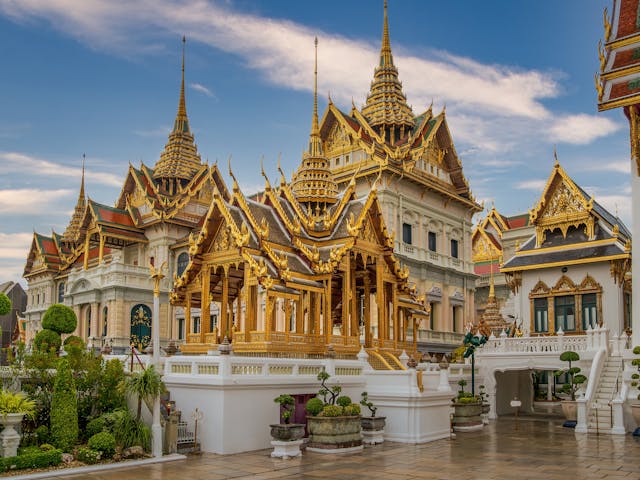
Photo by tom analogicus via pexels
Ritual That Has Never Broken Its Rhythm
What gives Bangkok’s temples their enduring power is not age alone, but uninterrupted use. Monks still chant at dawn. Devotees still light incense, offer flowers, and kneel in quiet concentration. These actions mirror rituals performed generations ago, creating a sense of time layered rather than linear. When visitors observe or respectfully participate, they step into a rhythm that predates modern Bangkok entirely. This continuity creates emotional gravity. The temples feel alive because they are alive, sustained by daily devotion rather than preserved as cultural artefacts.
Human Presence That Grounds the Sacred
Temples are often imagined as solemn and distant, but Bangkok’s temples are deeply human. Monks sweep courtyards, cats nap beside shrines, and elderly devotees rest in the shade. Life continues gently within sacred walls. This integration of the ordinary with the sacred prevents the space from feeling abstract or intimidating. It reinforces a core Buddhist idea: spirituality is not separate from daily life. Your luxury suite hotel in Bangkok, that lies outside these walls, such as The Siam Hotel Bangkok, reminds you that life is meant to peacefully exist in between these two worlds.
Stillness as a Counterweight to Urban Intensity
Bangkok’s pace is famously relentless, which makes the calm inside its temples feel even more profound. The contrast is not accidental; it is essential. Temples function as psychological anchors within the city, offering spaces where people reset before returning to the outside world. Stone floors cool the body, filtered light softens vision, and repetitive forms quiet the mind. Even brief visits can recalibrate attention and emotion. This ability to restore balance is why temples remain relevant, not just to worshippers, but to anyone seeking grounding amid intensity.
Stories Embedded in Murals and Stone
The temples of Bangkok are repositories of storytelling. Murals trace the life of the Buddha, moral parables, cosmological realms, and historical moments. Carvings depict guardians, demons, and celestial beings frozen in symbolic motion. These stories are not presented as exhibits; they surround visitors, unfolding slowly as the eye adjusts. Over time, details emerge: expressions, gestures, scenes of compassion and restraint. The storytelling is immersive and patient, rewarding those who linger. The secrets whispered here are not hidden; they are simply revealed at a pace slower than modern life usually allows.
A Spiritual Space That Welcomes Outsiders
One of the most compelling qualities of Bangkok’s temples is their openness. Visitors are not expected to understand everything, believe everything, or perform perfectly. Respect is enough. This inclusivity creates emotional safety, allowing people to engage on their own terms. Some come for prayer, others for curiosity, others simply to sit quietly. The temples accommodate all of this without tension. This generosity of space and spirit is part of why the experience feels intimate rather than imposing, and why so many people return without fully knowing why.
