Why are Serviced Apartments in Bangkok So Popular with Expats? -Trading Hotel Rooms for a Real Home Base
Ask any long-term foreigner living in Bangkok why they chose a serviced apartment over a hotel or a bare condo unit, and the answer usually comes down to one thing: they wanted a place that actually felt like home without the hassle of setting one up from scratch. Between the city's notorious traffic, the paperwork involved in renting privately, and the sheer size of Bangkok itself, serviced living has quietly become the default choice for professionals, families, and remote workers settling in for weeks, months, or years at a time.
Room To Actually Live In
Hotel rooms are built for short stays. A separate living area, a proper kitchen, and enough storage for more than a carry-on bag make a real difference once someone is unpacking for the long haul rather than passing through. Serviced apartments are designed around that reality, with layouts that let residents cook a proper meal, host a colleague for coffee, or simply spread out after a long day, rather than living out of a suitcase parked in the corner of a hotel room.
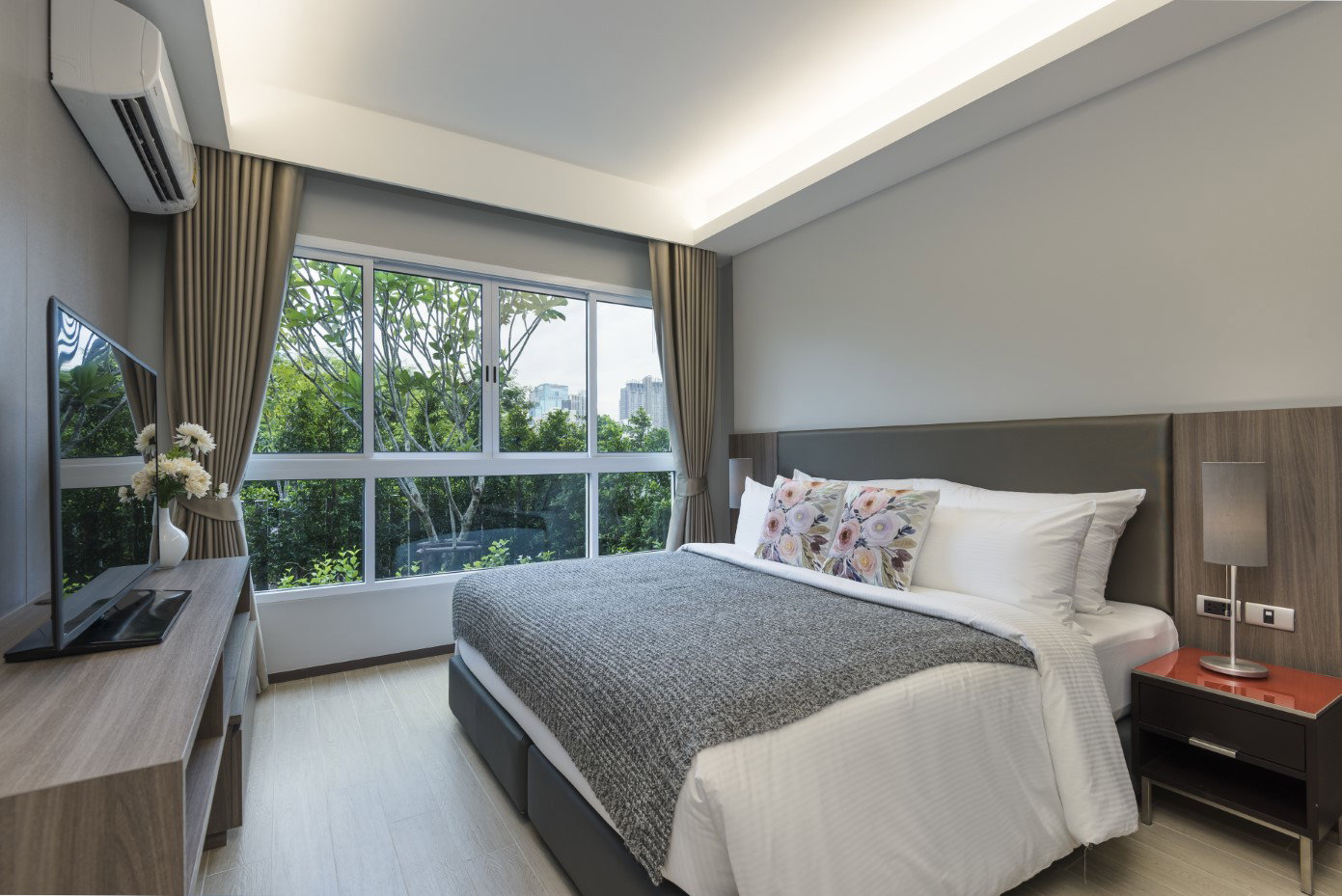
Image via Maitria Residence Rama 9 Bangkok
Location Without The Guesswork
Where an expat lands in Bangkok matters almost as much as the apartment itself, since the city's traffic can turn a short trip into an hour-long ordeal at the wrong time of day. This is where a well-located Bangkok service apartment earns its keep, particularly in newer business corridors along the MRT Blue Line, where residents can reach Sukhumvit in a few stops and Silom shortly after, without needing a car or relying on unpredictable taxis.Rama 9 has become one of the clearer examples of this shift, evolving from a quiet stretch of road into one of the city's newer commercial hubs, complete with office towers, shopping centres, and a growing residential base of long-term foreign professionals. Properties like Maitria Residence Rama 9 Bangkok sit comfortably within that mix, giving residents easy access to the MRT station along with everyday conveniences such as supermarkets and dining, all within a short walk rather than a taxi ride.
Everyday Comforts, Handled
Part of the appeal is how servicing living quietly takes off someone's plate. Housekeeping, maintenance, and building security are handled as standard, which matters a great deal to someone juggling a new job, a new city, and often a family adjusting to the move at the same time. Many properties also add in fitness facilities, pools, and communal spaces, giving residents a reason to stay on-site rather than seeking out a gym membership or a nearby coffee shop just to get out of a small room.
Value That Adds Up
On paper, nightly rates for serviced apartments can look higher than a basic hotel room, but the comparison changes once bills, furnishings, and daily conveniences are factored in. Renting an unfurnished condo independently usually means covering deposits, furniture, utility connections, and appliance purchases before move-in day even arrives.Serviced apartments fold all of that into one predictable monthly cost, which tends to work out considerably more affordable for anyone staying more than a few weeks and far less stressful to arrange from abroad.
A Ready-Made Community
Relocating to a new country is rarely just a logistical exercise, and the social side of serviced living tends to be underrated. Shared facilities and communal spaces put residents in regular contact with other expats and long-term guests navigating similar adjustments, from school searches to visa renewals, which can turn into genuine friendships far faster than a solo condo lease ever would.Settling into Bangkok for the long term rarely has a single deciding factor, but taken together, the space, the location, the reduced admin, and the built-in community explain why so many expats land on serviced apartments rather than a hotel room or a private rental. For anyone weighing up where to base themselves next, it is worth seeing why this option keeps winning them over.