What Makes Kataragama One of Sri Lanka’s Most Sacred Pilgrim Sites
Occupying the south-eastern reaches of Sri Lanka, Kataragama is a holy site that has been frequented by devotees of different faiths since time immemorial. Although the pilgrimage hub is primarily a Hindu site, it is an inter-faith hotspot that Sri Lankans treat with special deference. Here’s a look at what makes Kataragama unique among the isle’s spiritual touchstones and why it is popular among pilgrims with diverse beliefs.
A Shrine for One and All
Kataragama is perhaps the only religious highlight in Sri Lanka that houses shrines for nearly every major religious sect in the country. Similar to Adam’s Peak, which is also referred to as Sri Pada, Kataragama is a spiritual heartland that’s connected to every spiritual faction on the island. For Buddhists, Kataragama is among 16 locations in Sri Lanka that Lord Buddha visited during his lifetime. So the main point of interest for Buddhist pilgrims heading to Kataragama is Kiri Vehera, while the God of Kataragama is also identified as a guardian of the Buddhist faith and the island as a whole.For Sri Lankan Hindus, Kataragama is the sacred dwelling of Lord Murugan or Skandha, who is purported to have 6 faces and 12 hands and a peacock for a mount. Muslims on the island often head to Kataragama to pay homage to the Al-Khidir mosque that’s located within the city, while the country’s indigenous Vedda communities also believe that a Vedda princess served as the consort of Lord Murugan, thus connecting their race to the city’s patron deity.
The Rich History, Myths, and Legends
Travellers based at Mandara Rosen Kataragama and other accommodation hubs close to major Kataragama attractions will also note the rich legacy of the area’s key monuments and temples, as many have elaborate backstories and legends associated with their construction and features. Chronicles of Kataragama as a holy precinct are also part of the oral histories set down in the Mahavamsa, while there are equally compelling religious folktales that are intimately connected with the God of Kataragama, the princess Valli, and the special occasions on which the Buddha and famous Sri Lankan monarchs paid homage to the city’s guardian deity.
Fascinating Rituals, Parades, and Devotional Practices
As a predominantly Buddhist nation, Sri Lanka’s religious rituals, festivals, and parades are rather understated in nature, with the Kandy Esala Perahera serving as one of the few grand spectacles in the annual event calendar. The yearly Kataragama Perahera or the Kataragama Esala Festival, however, is a celebration that’s as dramatic and colourful as it is awe-inspiring, especially when considering the acts of devotion performed by those who walk on fire or perform excruciating acts of penance or pierce their bodies to demonstrate their commitment to their faith.The daily pooja ceremonies are no less intriguing as pilgrims assemble baskets laden with fresh fruits, flowers, incense sticks, and coconuts to secure the blessings of Lord Murugan. The chanting and bells of Kataragama’s main Hindu shrine reverberate across the landscape during the ceremonial hours of the day and night when devotees make their offerings.
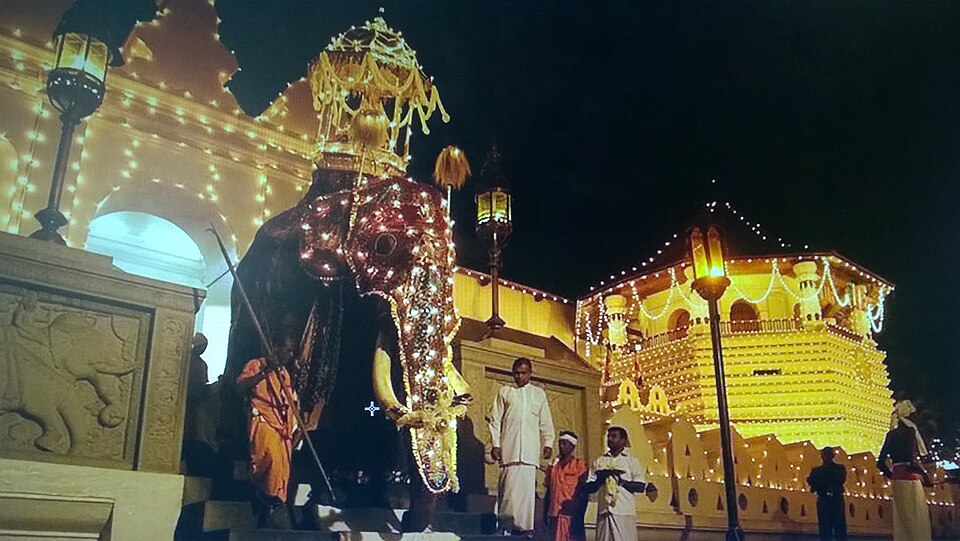
Shashikaprathibha, Kandy Perahera, CC BY-SA 4.0
The Pada Yatra Pilgrimages
Hindu devotees who occupy the northernmost city in Sri Lanka are also known to make an annual journey to Kataragama on foot, and these spiritual voyages are considered a penance or an offering that’s made by those who are willing to make great sacrifices in order to complete the journey. This centuries-old tradition speaks to the special place Kataragama holds in the hearts of its most faithful devotees, as this religious tradition has survived to this day, even if the types of austerities pilgrims must endure along the journey have been eased due to modern conveniences.
The River of Gems
The Manik Ganga or River of Gems, which flows by the Kataragama Temple, is another reason why the site is a popular stopover for pilgrims of diverse faiths. As a body of water that’s a part of countless myths and legends, it is the location where worshippers enjoy a ritual bath to cleanse themselves before entering the temple grounds.
