What Makes Bangkok One of Asia’s Most Popular City Break Destinations?: Exploring 'The Big Mango'
A longtail boat moves along the Chao Phraya as Bangkok begins to stir. Monks make their morning rounds, vendors prepare breakfast and elevated trains carry commuters above the streets. By evening, the same city has changed completely, with Yaowarat glowing beneath rows of signs and food stalls filling the pavements. Bangkok can shift from centuries-old temples to rooftop views and late-night markets within the same day, which is a big part of what makes the Thai capital so well suited to a city break.
Where Centuries of History Still Shape Everyday Bangkok
Bangkok’s historic centre is closely connected to the Chao Phraya River. The Grand Palace has been an important royal landmark since Bangkok became the capital in 1782, while Wat Phra Kaew, within the palace grounds, houses the Emerald Buddha. Nearby Wat Pho is famous for its 46-metre-long reclining Buddha and its connection with traditional Thai massage.Across the river, Wat Arun offers a very different view. Its central prang is covered with intricate decoration made from porcelain and seashells. A short ferry crossing separates it from the old city, making it easy to combine several of Bangkok’s best-known sights in one outing.There are also quieter alternatives. Wat Saket, known as the Golden Mount, rises above the old city and leads to a hilltop chedi with views across Bangkok. Museum Siam takes a more modern approach to the country’s history through interactive exhibitions. The result is a historic district where temples, museums, markets and ordinary neighbourhoods sit surprisingly close together.
Bangkok’s Food Scene Is an Attraction in Itself
Food is one of the easiest ways to experience another side of Bangkok. Start with pad kra pao, minced meat stir-fried with holy basil and chilli, usually served with rice and a fried egg. Boat noodles come in small bowls with a rich, seasoned broth, while som tam combines shredded green papaya with lime, chilli and fish sauce.For something more substantial, tom yum goong brings prawns together with lemongrass, lime and chilli in a hot-and-sour broth. Moo ping, grilled pork skewers commonly eaten with sticky rice, makes a quick snack, while mango sticky rice combines ripe mango with coconut-infused sticky rice and coconut cream.After sunset, Yaowarat becomes one of the city’s most recognisable food districts, with seafood restaurants, noodle shops and street vendors taking over the pavements. Bangkok’s culinary reputation extends well beyond street food, too. In 2026, the city ranked first in ASEAN and second in Asia in Tripadvisor’s Best of the Best Food-Asia category.
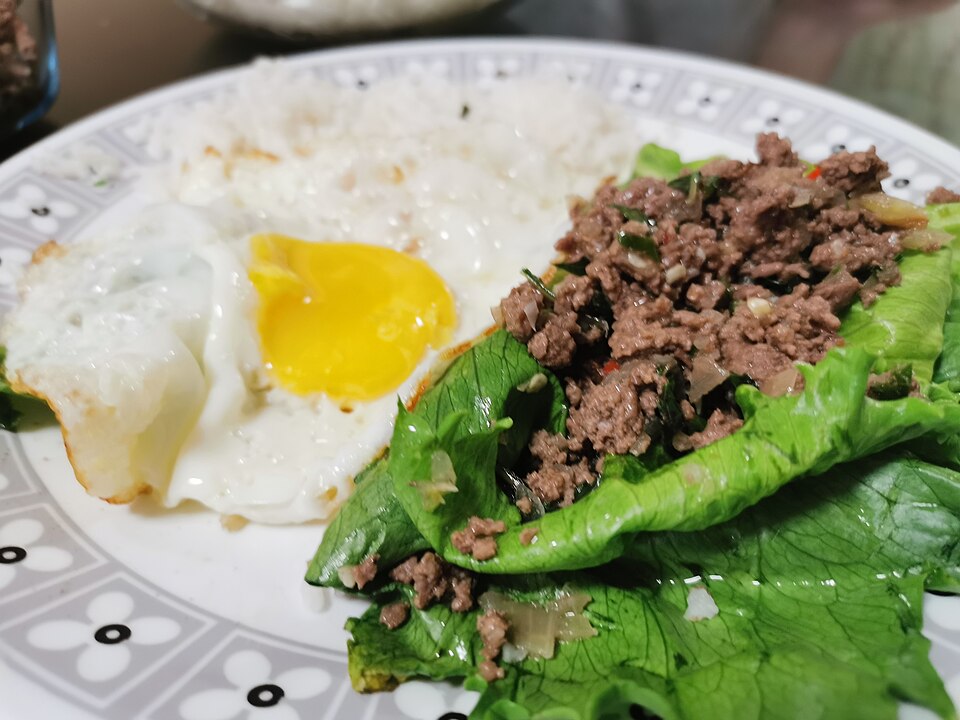
Mdsheth1986, Daging Pad Kra Pao, CC BY-SA 4.0
Skyscrapers, Markets and Night Views Add Another Side
Modern Bangkok provides a sharp contrast to the old city. Around Siam, enormous shopping centres sit alongside busy pedestrian areas, while Sukhumvit has restaurants, cafés and nightlife spread along the BTS route.Chatuchak Weekend Market offers a completely different kind of shopping, with thousands of stalls selling clothing, handicrafts, plants, antiques and food. For a view from above, the Mahanakhon SkyWalk rises 314 metres over the city. ICONSIAM, beside the Chao Phraya, combines shopping with restaurants and Thai cultural displays.Accommodation location can make a difference on a short trip. The best hotels in Bangkok, Thailand, are spread across districts with very different surroundings, so checking access to the BTS, MRT or river transport can be more useful than looking at the address alone.
Getting Around Opens Up More of the City
Bangkok’s traffic can be daunting, but visitors have several alternatives. The BTS SkyTrain operates two lines covering approximately 68.5 kilometres and 60 stations, while the MRT provides additional rail connections. Boats along the Chao Phraya are particularly useful around the historic centre.The different transport options can become part of the sightseeing. A morning might begin on the SkyTrain towards Siam, continue by riverboat towards the old city and finish with an evening walk through Chinatown. Tuk-tuks are another familiar sight, although it is sensible to agree on the fare before travelling.
Different Neighbourhoods Tell Different Stories
Some of Bangkok’s character appears away from its major attractions. Talat Noi has narrow lanes, old shophouses, murals and a long-established Chinese-Thai community. Nearby Charoen Krung combines historic buildings with galleries, cafés and newer creative spaces.Kudi Chin offers another glimpse into Bangkok’s multicultural past. This riverside community has Portuguese connections dating back centuries, and its traditional kanom farang kudi chin, a small sponge cake made with eggs, sugar and flour, reflects that heritage.The city’s hotel landscape follows this same pattern. Avani Hotels & Resorts has three Bangkok properties, located in Riverside, Sukhumvit and Ratchada, reflecting the spread of accommodation across the capital’s distinct districts.
Planning Around Bangkok’s Heat and Rain
Bangkok’s tropical climate can have a noticeable effect on a sightseeing itinerary. November to February is generally cooler, while March and April bring some of the year’s hottest conditions. The wetter months can bring sudden, heavy showers, although they do not necessarily last for the entire day.During hotter periods, starting temple visits early is sensible. The middle of the day can then be spent exploring museums, shopping centres or cafés before heading outdoors again later.It is also worth leaving some space between major sights rather than trying to fill every hour. Bangkok rewards a slower pace, particularly in neighbourhoods away from the main tourist circuit. A bowl of boat noodles near a busy market, a ferry ride along the Chao Phraya or a walk through the old shophouses of Talat Noi can become just as memorable as the attractions that originally brought you to the city.For a short break, that variety is perhaps Bangkok’s greatest strength. Three days can introduce you to its temples, food and modern city life, while a return visit can take you into completely different neighbourhoods without feeling as though you are repeating the same trip.
