What Makes a Wellness Hotel in Bangkok Worth It for Modern Travellers? – Finding Time to Slow Down in a City That Never Seems to Stop
Bangkok can fill a day without much effort. You might begin with the Grand Palace, stop for boat noodles at lunchtime, spend the afternoon browsing shops around Siam and end up in Yaowarat after dark. Add the heat, walking and traffic between neighbourhoods, and a packed itinerary can become tiring surprisingly quickly. A wellness-focused hotel offers another option: instead of leaving relaxation until the end of the holiday, travellers can build time to rest, exercise and recharge into the same trip.
What Is Wellness at a Bangkok Hotel?
Wellness at a city hotel is not necessarily about spending several days following a retreat programme. It can be much more practical. A good fitness centre, swimming pool, spa, sauna, steam room or treatment menu can give travellers ways to recover between sightseeing, work commitments and meals.
The difference is particularly noticeable in Bangkok because the city encourages an active itinerary. Walking around the grounds of the Grand Palace, exploring Wat Pho and Wat Arun, shopping in large malls and travelling between neighbourhoods can involve several hours on your feet.
A wellness facility gives visitors somewhere to pause without giving up the rest of the day. You could visit temples in the morning, return to the hotel during the hottest hours and head out again for dinner or an evening market.
Why Does Location Matter as Much as the Wellness Facilities?
A hotel can have an impressive spa, but it becomes less useful if reaching the city’s main attractions requires long journeys through traffic. For a short Bangkok stay, location can therefore have as much influence on the experience as the facilities themselves.
Properties near the BTS Skytrain or MRT make it easier to move between districts without relying entirely on cars. River access can also be useful for travellers planning to visit the historic areas around the Chao Phraya River.
This creates more flexibility. Instead of spending the entire afternoon sightseeing because returning to the hotel would be inconvenient, you can take a break, shower, swim or rest and continue later. The practical benefit is not simply having a wellness facility; it is being able to use it without disrupting the rest of the itinerary.
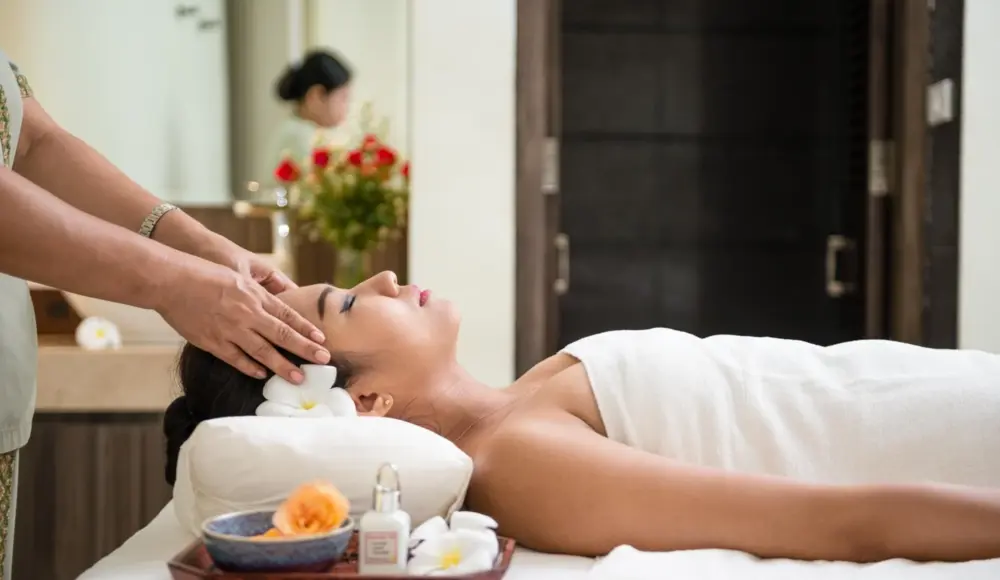
Image via Chatrium Hotels and Residences
What Makes a Hotel’s Wellness Facilities Actually Useful?
Not every wellness facility serves the same purpose. A proper fitness centre can be valuable to travellers who want to maintain their usual exercise routine, while a swimming pool provides an easier way to cool down after a hot day.
Spa facilities add another dimension. Traditional Thai massage is closely associated with the country’s wellness culture and uses techniques involving pressure, stretching and assisted movement. Treatments can therefore be more than a conventional relaxation massage, although the experience varies between spas.
Some Bangkok properties combine these options. Chatrium Hotels and Residences, for example, has different wellness facilities across its Bangkok properties. Chatrium Grand Bangkok includes THANN Sanctuary, a swimming pool and a 24-hour fitness centre. Chatrium Sathon Bangkok has Green Leaf Spa & Salon, a fitness centre, sauna and swimming pool, while Emporium Suites by Chatrium has fitness facilities alongside steam and sauna amenities.
The important point is variety. Someone who wants to exercise before breakfast needs something different from a traveller looking for an hour of quiet after sightseeing.
Why Can Wellness Be More Useful on a Short Trip?
A three-day Bangkok holiday leaves little room for wasted time. Travellers often try to combine temples, shopping, food, nightlife and neighbourhoods into a single itinerary.
That makes small wellness breaks more practical than a separate retreat. A business traveller could exercise before a morning meeting. A couple could book a treatment after spending the day exploring Chinatown. Someone returning from a temple visit could use the pool before getting ready for dinner.
This is also why the idea of a wellness hotel in Bangkok is broader than simply finding a property with a spa. The useful question is how easily the facilities fit around the way you intend to spend your time.
What Should You Check Before Booking?
Start with the facilities you are actually likely to use. If exercise is important, check whether the gym has cardio machines, free weights and enough space for the type of workout you prefer. If swimming is your priority, find out whether the pool is designed for laps or mainly for leisure.
Spa opening hours and treatment availability are worth checking too. Popular treatments may need to be reserved ahead of time, particularly if you want an appointment after a full day of sightseeing.
Location deserves equal attention. Check how close the hotel is to a BTS or MRT station, major roads or river transport, depending on your plans. A slightly smaller wellness offering can be more useful when you can return to it easily between activities.
How Can You Build Wellness into a Bangkok Itinerary?
There is no need to turn a Bangkok holiday into a health retreat. The city’s food, markets and nightlife are part of the experience, and avoiding them would defeat the purpose of visiting.
Instead, balance the more demanding parts of the day. Visit outdoor attractions early, take a break during the hottest hours and leave some evenings less structured. After several hours exploring, a swim or massage can be more useful than squeezing another attraction into the schedule.
Food can follow the same principle. There is nothing wrong with enjoying pad Thai, boat noodles or mango sticky rice; simply balance heavier meals with fresh fruit, vegetables and plenty of water throughout the day.
That makes wellness less of an extra activity and more of a practical part of travelling well. In a city where there is always another neighbourhood to explore, a restaurant to try or train to catch, having somewhere to slow down can make the difference between seeing more of Bangkok and simply rushing through it.
