What Is Riverside City Living and Why Bangkok Is Ideal for It?
Riverside living marks a shift in urban planning where water dictates the pace of life. Far from congested concrete corridors, waterfront districts prioritise air quality and panoramic vistas. While cities once used rivers solely for commerce, these zones are now premium hubs for high-end residences and leisure, allowing professionals to swap traditional commutes for scenic, breeze-filled transits.
Bangkok: The Veins of the Chao Phraya
Bangkok serves as a primary example of why riverside living is a functional necessity for those seeking urban balance. The Chao Phraya River is the city’s primary artery, weaving through ancient heritage sites and contemporary architectural landmarks. While the inner city often suffers from the "urban heat island" effect, the riverside offers a microclimate that is noticeably cooler and more breathable. Recent climate data indicates that riverfront temperatures can remain up to 2°C lower than landlocked commercial zones during peak afternoon hours. This cooling effect, combined with the rhythmic activity of the water, provides a multidimensional experience that landlocked districts simply cannot replicate.
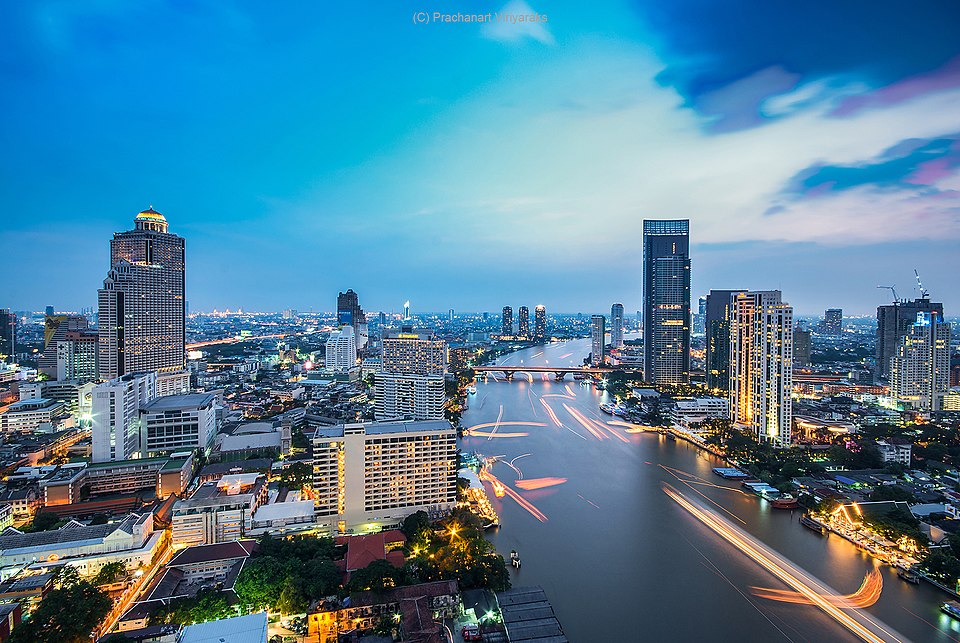
Nik Cyclist from Bangkok, Thailand, Chao Phraya River from CAT building (8134954465), CC BY 2.0
Seamless Connectivity and the Blue Infrastructure
A compelling reason to choose the riverside in Bangkok is the sophisticated "blue infrastructure". The city’s boat network, ranging from the iconic express boats to sleek electric vessels, connects residents to the BTS Skytrain system with remarkable efficiency. Living by the water largely eliminates the unpredictability of Bangkok’s road traffic, transforming the daily travel experience into a reliable and scenic routine. The upcoming completion of the Kiakkai Bridge in 2026 further enhances this mobility, easing cross-river transit for vehicles and pedestrians alike. This connectivity ensures that while one lives in a tranquil sanctuary, the financial and commercial hearts of the city remain accessible within minutes.
Curated Hospitality as a Lifestyle Standard
The riverside is synonymous with an elevated standard of service and community space. Modern developments in this area often integrate luxury hospitality with local culture, creating a lifestyle where five-star amenities are part of the neighbourhood fabric. For instance, Avani+ Riverside Bangkok Hotel illustrates how contemporary design can harmonise with the river’s historical backdrop, offering rooftop spaces that serve as social anchors. These establishments often lead in regional sustainability, with some recently achieving Platinum certification for environmental and community management. These landmarks act as extended living rooms for the community, providing high-quality dining and wellness facilities that are often absent in purely residential districts.
Architectural Innovation and Vertical Serenity
Bangkok’s riverside skyline has undergone a radical transformation, moving toward architectural masterpieces that maximise light and space. Modern residences along the water are designed with floor-to-ceiling glass to capture the shifting reflections of the Chao Phraya. This "vertical serenity" allows individuals to live high above the noise while maintaining a visual link to the activity below. Selecting a riverside hotel in Bangkok for a stay or choosing a permanent residence nearby means investing in an environment where the view is a functional element of the interior design. Furthermore, the integration of private piers and river-facing balconies ensures that the architecture remains deeply rooted in its unique aquatic context.
Sustainable Growth and Long-Term Value
Waterfront property remains some of the most resilient real estate globally, often maintaining its value even during market fluctuations. As Bangkok expands, the limited availability of riverfront land ensures these areas remain exclusive and highly valued by international investors. Furthermore, the city is focusing on "green and blue" initiatives, revitalising old warehouses into creative hubs and expanding public parks along the banks. New pedestrian and cycling bridges planned for 2026 and beyond will soon link historic trade corridors like Song Wat with the modern residential side of Thonburi. This commitment to sustainable urban renewal ensures that the riverside remains the cultural heart of Thailand, offering a quality of life that evolves alongside the city’s technological growth.
