Exploring Phuket’s Temples - Gateways to Culture and Spiritual Heritage
Phuket’s global reputation may rest on its white sands and turquoise bays, but beyond the coastal glamour lies another side of the island — one steeped in culture, spirituality, and quiet reflection. The temples of Phuket, or wats as they’re known locally, stand as timeless symbols of Thai identity and devotion. These sacred spaces are not mere tourist attractions; they are living institutions where the island’s traditions, artistry, and community values converge. To explore them is to peel back the island’s glossy surface and discover the rhythm of its spiritual heart.
Wat Chalong: The Spiritual Centre of Phuket
No temple embodies the soul of the island quite like Wat Chalong. Built in the early 19th century, it remains Phuket’s most revered Buddhist temple, dedicated to two highly respected monks, Luang Pho Chaem and Luang Pho Chuang. The complex is a masterpiece of Thai religious architecture, adorned with gold-leaf details, intricate murals, and statues depicting the Buddha’s life. Inside its grand pagoda lies a relic believed to be a fragment of the Buddha’s bone — a symbol of immense reverence for Thai Buddhists. Wat Chalong also serves as a place of healing and guidance, attracting both worshippers and travellers seeking a moment of peace amid Phuket’s energy.
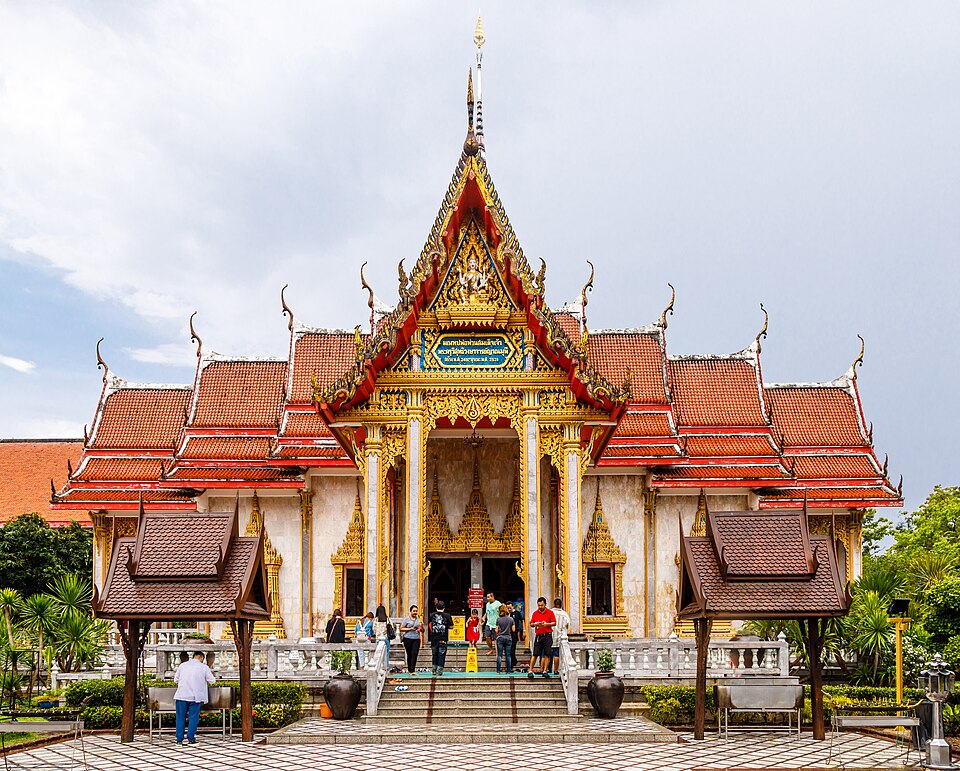
Photo by CEphoto, Uwe Aranas or alternatively © CEphoto, Uwe Aranas, Phuket Thailand Wat-Chalong-02, CC BY-SA 4.0
Wat Phra Thong: A Legend Half-Buried in Gold
Wat Phra Thong, or the Temple of the Golden Buddha, carries one of Phuket’s most intriguing legends. The temple’s main statue is only half-exposed from the ground, said to be unmovable after repeated attempts to excavate it. Local folklore tells of a boy whose buffalo unearthed part of the statue centuries ago, leading to mysterious events that prompted villagers to build a temple around it. Today, Wat Phra Thong remains an enduring reminder of Phuket’s spiritual storytelling tradition — a fusion of faith, myth, and history that keeps local culture alive in every whispered tale.
Wat Khao Rang: Where Art and Faith Converge
Perched on Rang Hill, Wat Khao Rang offers one of Phuket’s most impressive Buddha statues — a massive golden figure overlooking the city below. Beyond its striking visual appeal, the temple is known for its artistic heritage. It was the first in Phuket to feature a large seated Buddha, a design that inspired similar sculptures across southern Thailand. The temple grounds, framed by tropical greenery, create a serene environment where locals come to meditate and find perspective. It’s also a reminder that in Phuket, spirituality is not confined to ritual; it extends into art, architecture, and the shared pursuit of harmony.
Wat Phra Nang Sang: The Oldest Temple with Many Faces
Known as the “Temple of the White Blood,” Wat Phra Nang Sang is Phuket’s oldest temple, dating back more than 500 years. Its design is strikingly eclectic, combining elements from different periods of Thai and Sino-Portuguese architecture. The temple enshrines several revered Buddha images, and beneath its ancient chedi, archaeologists discovered tin and porcelain artefacts that reflect Phuket’s maritime trading past. The site embodies the island’s layered history — a crossroads of culture and belief where merchants, monks, and kings once crossed paths. Visiting Wat Phra Nang Sang feels like walking through a chronicle of Phuket’s evolution, where faith adapts but never fades.
Why Phuket’s Temples Matter Today
In an island better known for nightlife and Phuket luxury resorts such as the famous Anantara Koh Yao Yai Resort & Villas, these temples restore balance by grounding visitors in Phuket’s spiritual roots. Each Wat offers a glimpse into how Thai culture expresses devotion through beauty, patience, and precision. The rhythmic chants, fragrant incense, and meticulous offerings remind travellers that beneath the island’s modern exterior lies a centuries-old dialogue between the divine and the everyday. Exploring Phuket’s temples isn’t about ticking off landmarks; it’s about understanding an identity shaped by faith, resilience, and reverence. For anyone seeking depth beyond the shoreline, these sacred spaces remain the island’s most powerful storytellers..
